
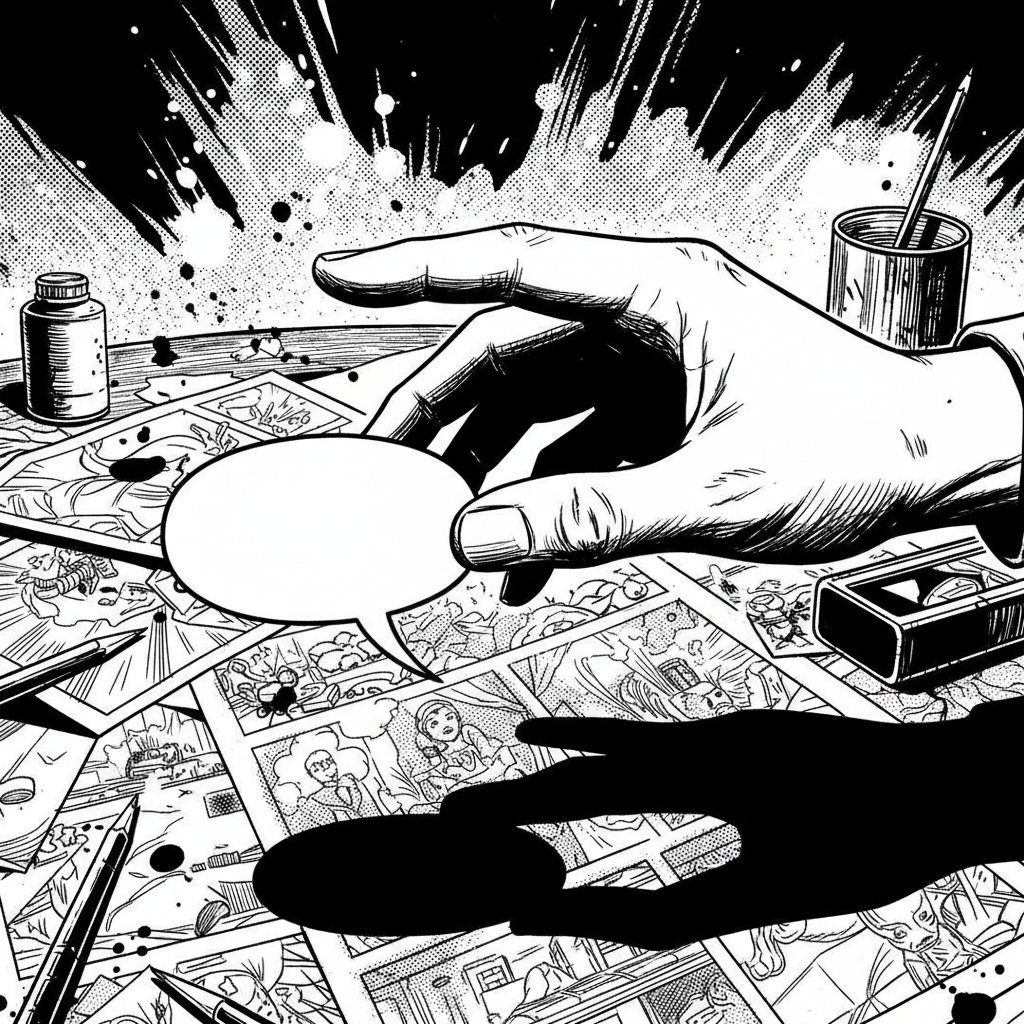
Dialogue: The Often-Overlooked Narrative Rhythm Element
The Importance of Timing in Comics
Pacing in comics isn't just about the sequence of panels. It's intrinsically linked to how readers absorb information, both visual and textual. Dialogue, through its placement and content, plays a crucial role in this perception of narrative flow.
When Bubbles Speak Too Much or Too Little
Speech bubbles overloaded with text, or conversely, dialogues that are too short and spaced out, can create disruptions in the reading flow. This forces the reader to stop, re-read, or worse, lose track of the action. Knowing how to create a comic book involves this delicate balance.
The Impact on Immersion and Comprehension
Poorly calibrated dialogue can distort the author's intent, make a character less believable, or render a scene less dynamic. The effect is a choppy, less enjoyable, and potentially frustrating reading experience for your audience.
🚀 Optimize Your Comic Dialogue
Need help synchronizing your speech bubbles and improving the rhythm of your stories? Discover how our tools can transform your creative process.
Discover Bulle.aiSteps to Punchy and Rhythmic Dialogue
Step 1 — Define the Function of Each Dialogue
Each speech bubble should serve a specific purpose: advance the plot, reveal a character trait, create an atmosphere, or provide essential information. Eliminate anything superfluous for an effective approach to how to create a comic book.
Step 2 — Adapt Text Length to the Panel
The size of the bubble and the amount of text it contains should be in harmony with the panel. A dynamic panel can handle shorter, punchier dialogue, while a more relaxed panel can accommodate a more developed explanation.
Step 3 — Craft Concise Phrasing
Use short sentences and vocabulary appropriate to the character and situation. Avoid unnecessary repetition and overly complex phrasing that slows down reading.
Step 4 — Strategically Place Speech Bubbles
The reading order of speech bubbles is crucial. It should naturally guide the reader's eye through the conversation, following the logical flow of the dialogue.
Step 5 — Test Fluidity Aloud
Reading dialogues aloud helps identify awkward phrasing, excessive length, or rhythms that don't work. It's an excellent way to ensure the musicality and flow of the conversation.
✨ From Idea to Published Comic
Go from your initial concept to a shareable work. Simplify image generation and page layout.
Explore FeaturesThe Art of Concision and Suggestion in Dialogue
The Power of the Unspoken
Sometimes, what isn't said is more important than what is expressed. Leaving room for doubt, suggesting an emotion or intention through silence or a short reply can be extremely powerful and enrich the narrative.
Economy of Words in Service of Action
During intense action sequences, dialogues should be brief, impactful, even fragmented. Every word counts and must contribute to the urgency of the situation. The goal is to maintain tension, not dilute it with unnecessary explanations.
The Importance of Subtext
Dialogue isn't just about the words spoken. Subtext is what lies beneath the surface: hidden emotions, concealed intentions, the unspoken. Working on subtext makes your characters more complex and your dialogues more captivating.
Adapting to Visual Constraints
Dialogue must integrate seamlessly with the artwork. The placement of speech bubbles, their size, and even their shape can influence the perception of rhythm and emotion. A good balance between text and image is essential for successfully creating quality comic books.
💡 Create Faster, Publish Better
Save time on every step of your creation. Save your prompts and reuse elements for accelerated production.
Try NowConclusion
Mastering the art of synchronized dialogue is fundamental to creating captivating comics. By paying attention to rhythm, concision, and the integration of speech bubbles within the artwork, you transform a simple sequence of panels into a fluid and immersive reading experience. Don't wait to optimize your scripts and bring your stories to life with the speed and quality they deserve. Explore the tools that can help you perfect every aspect of your creation, from dialogue to visuals, to move from idea to published work faster than ever before.