
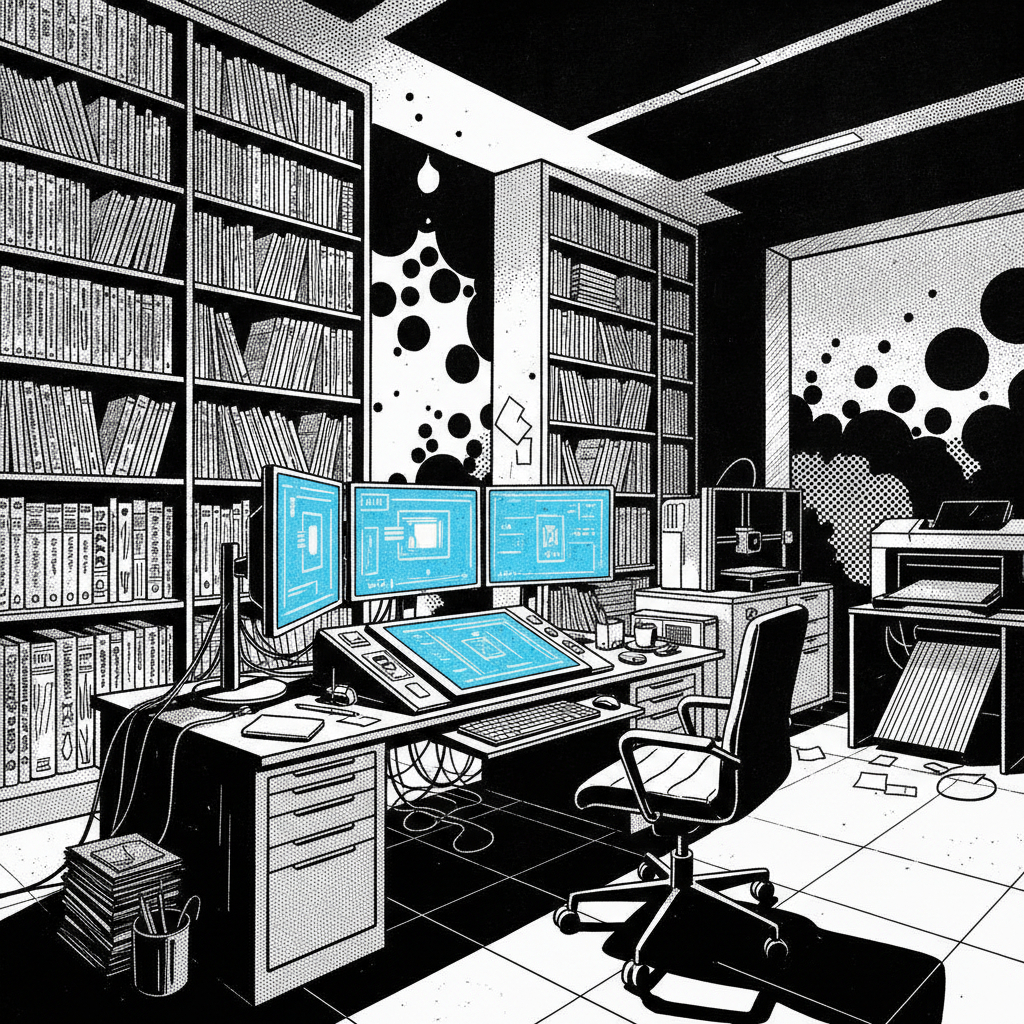
The Digital Revolution and Its Early Impacts on Comic Creation
The Rise of Digital Tools
Drawing and lettering software have gradually replaced paper and ink, offering unprecedented flexibility. The adoption of graphic tablets and interactive screens marked a new era in the interaction between the artist and their line. The democratization of these tools also opened doors for new talents eager to dive into comic creation.
New Workflows and Formats
Digital page management has simplified the organization and archiving of works. The emergence of web formats like webtoons and online comics has influenced storytelling and distribution. This transition has also facilitated remote collaboration on joint projects, breaking down geographical barriers.
🚀 Launch Your Comic Project with AI
Transform your ideas into ready-to-publish pages with innovative tools.
Discover Bulle.aiAI at the Service of the Creator: A Mini-FAQ
How can AI help generate ideas for a comic?
AI can suggest scenario concepts, character developments, or narrative arcs based on themes or genres specified by the creator, thus stimulating imagination and helping to kickstart the comic creation process.
Can AI replace the artist in creating images for a comic?
Currently, AI is more of an assistant. It can generate sketches, textures, or backgrounds, but the final artistic touch, stylistic consistency, and character emotion remain the domain of the human creator.
How can AI speed up the page layout process?
Some AI-based tools can assist with automatic layout, lettering, and even preliminary coloring, by applying predefined styles or suggesting optimal arrangements to create a comic faster.
What are the benefits of using AI for iterating images and characters?
AI allows for rapid exploration of numerous variations of a character or scene by modifying prompts, offering unprecedented flexibility to refine artistic vision and create a unique comic.
How can AI help save and reuse creative assets?
Platforms integrating AI can save prompts, graphic styles, and character assets, allowing creators to easily reuse them in future projects or for iterations, thus creating a more efficient workflow for comic creation.
💡 Generate Scenarios and Images
Explore the creative possibilities offered by artificial intelligence for your next comic.
Try nowThe Modern Creator's Workflow: Key Steps to Publication
Step 1 — Assisted Ideation and Scriptwriting
Define the initial concept and structure the narrative, potentially using AI to explore narrative paths or character developments. This is the starting point for creating a comic.
Step 2 — Character and Background Design and Iteration
Create the visual identity for characters and environments, leveraging AI tools to generate variations and refine the graphic style. The goal is to achieve impactful visuals.
Step 3 — Page Generation and Layout
Produce the page illustrations, combining manual work with AI's image generation capabilities, then organize lettering and layout to assemble the pages.
Step 4 — Optimized Export and Publication
Adapt the final files to the required formats for various publication platforms (print, web, mobile), benefiting from automated exports for efficient distribution.
✨ Streamline Your Creation Workflow
Accelerate your comic production, from ideation to export.
Learn moreConclusion
The evolution of comic creation, moving from paper to digital and now integrating artificial intelligence, has profoundly transformed the creator's profession. These new technologies do not replace artistic vision but offer powerful tools to accelerate production, explore new ideas, and overcome creative blocks. Innovative platforms embody this new era, allowing creators to bring their works to life more quickly and efficiently, and to reach a wider audience. The future of comics is being written today, at the crossroads of human imagination and technological innovation for comic creation.